
(Simple steps for parents to bring Montessori into everyday life)
The blue words you see on this page are clickable links.
Tap or click them to explore recommended Montessori materials, parenting resources, and products that help you create a calm and creative home for your child.
1. Create a Calm and Orderly Space
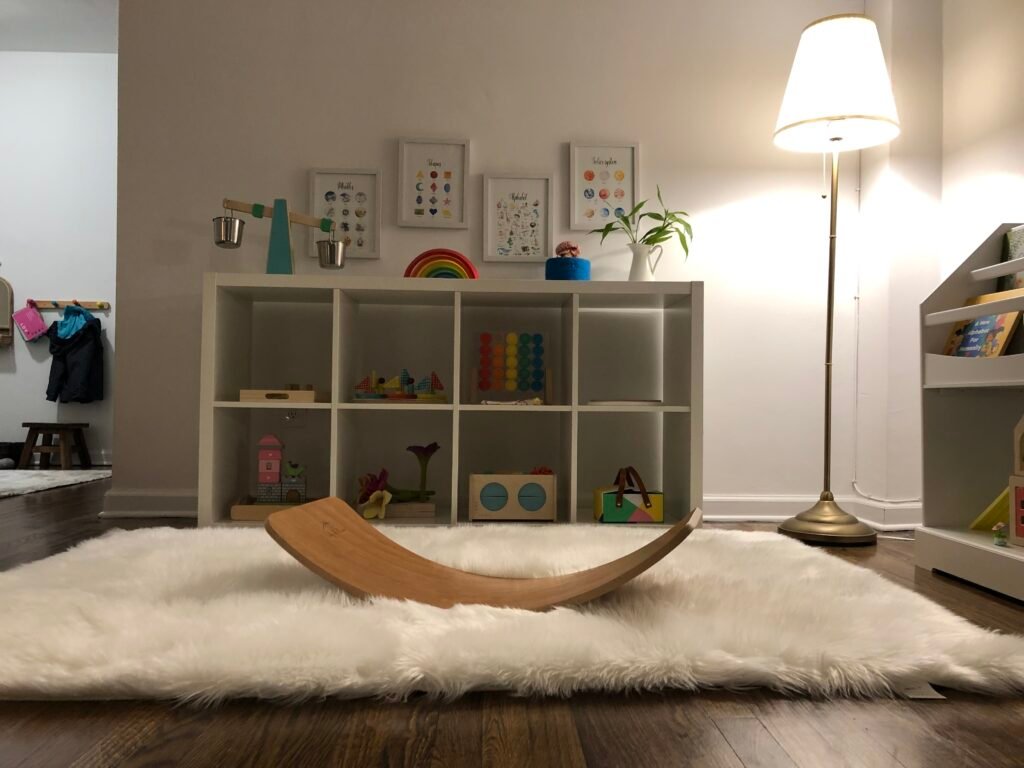
Montessori begins with the environment. Keep rooms tidy, with everything in its place. Use low shelves so your child can reach toys and materials independently. Choose natural colors, soft light, and uncluttered spaces – simplicity helps children focus and feel calm.
2. Use Real and Natural Materials
Replace plastic toys with real, sensory materials — wood, metal, fabric, glass. Real objects help children understand the world better and teach responsibility (I have to carry this carefully).
3. Encourage Independence in Daily Life
Let your child do simple tasks: pour water, prepare snacks, fold towels, brush hair, choose clothes. These everyday “practical life” skills are the heart of Montessori. The goal is not perfection – it’s participation.
4. Follow the Child
Observe your child instead of directing. Notice what interests them, what challenges them, and what makes them curious. Offer activities that match their natural stage of development – not what we think they should learn.
5. Limit Toys and Choose Purposeful Ones
Quality over quantity. Offer only a few materials at a time – puzzles, stacking toys, sensory bins, counting beads, books. Rotate them weekly so your child feels renewed interest.
6. Create Routines and Predictability
Children thrive on consistency. Simple routines for morning, meals, and bedtime give them security and freedom to explore confidently.
7. Include the Child in Family Life
Invite them to help with real work — cooking, cleaning, gardening. Children love to imitate adults and feel useful. It builds focus, confidence, and connection.
8. Model Respect and Calm
Speak gently. Move slowly. Show kindness. In Montessori homes, the adult is the “guide” — not a boss. Your tone and attitude teach far more than words.
9. Create a Montessori Play Area
A low table, child-sized chair, open shelves with baskets for sorting, a small rug for floor work. Keep materials organized and beautiful — children are drawn to order.
10. Nurture Curiosity and Wonder
Go outside every day. Collect leaves, observe bugs, water plants. Nature is the best Montessori classroom. Ask open questions like “What do you notice?” or “How does this feel?”
Remember
Montessori at home is not about perfection — it’s about connection.
The goal is to raise children who are independent, kind, confident, and curious.
Start small, observe your child, and let them lead.
Every home can become a Montessori home — because Montessori is not a method, it’s a mindset of love and respect.